Most people assume their kitchen beats grandma’s – more gadgets, more storage, more shiny appliances. But here’s the twist nobody wants to admit: the modern kitchen didn’t move forward from hers. It got smaller.
The tools grandmothers relied on daily were built to last decades and cook better food. Some are now worth hundreds of dollars, sitting quietly in antique shops waiting for someone to realize what they’re holding.
Turns out, we didn’t upgrade – we just replaced. Here’s what the data and the collectors actually say, starting with something still buried in half of America’s cabinets.
#25 – The Ceramic Canister Set
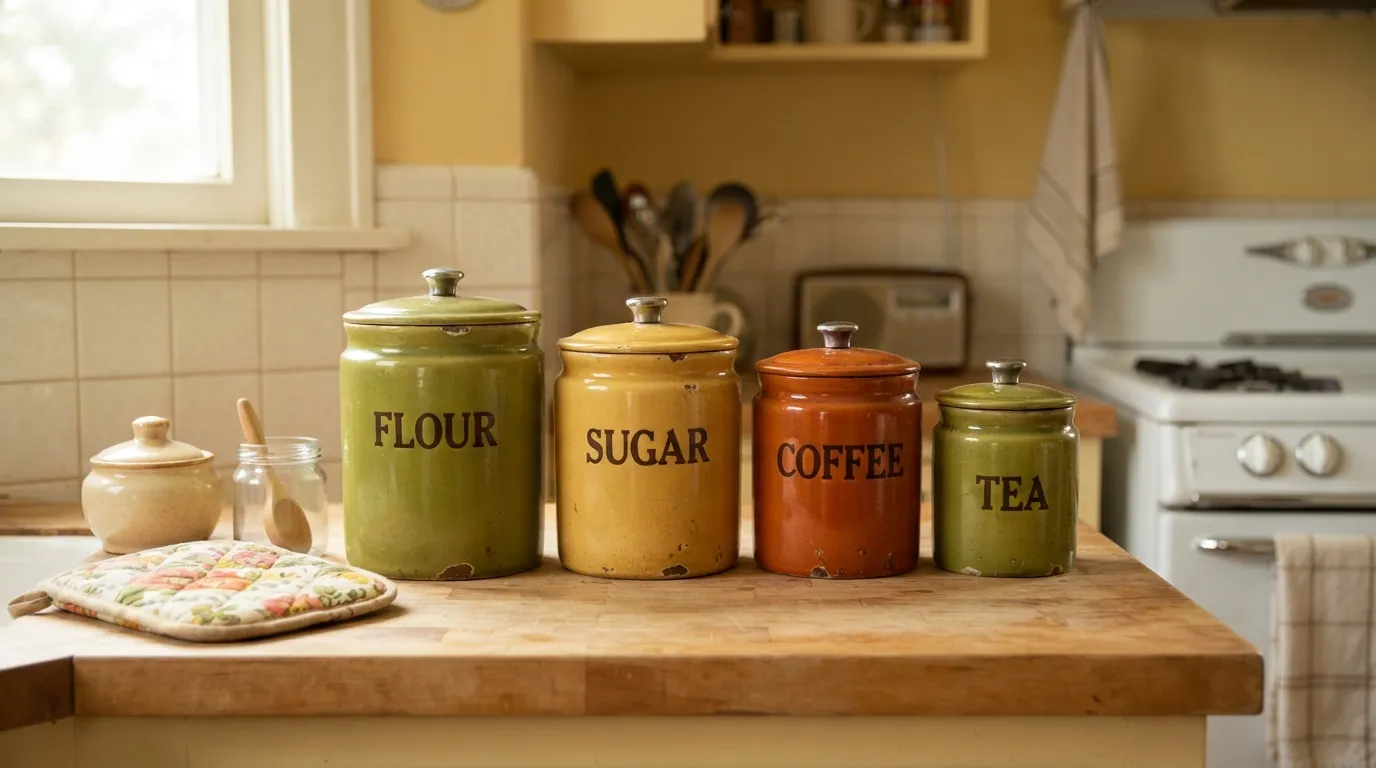
Flour, sugar, coffee, tea – each had its own labeled ceramic or tin canister, lined up in a tidy row. Grandma never rummaged through unlabeled bags; she just reached and knew.
Popular colors were avocado green, harvest gold, and burnt orange, easily filling two feet of counter space. Today we cram dry goods into plastic bags shoved to the back of a shelf.
Prices for vintage sets range from about $30 for aluminum to well over $250 for a single pristine tin. Grandma’s “old junk” is now somebody else’s collector’s dream.
But that’s nothing compared to what we found about #24…
#24 – Depression Glass
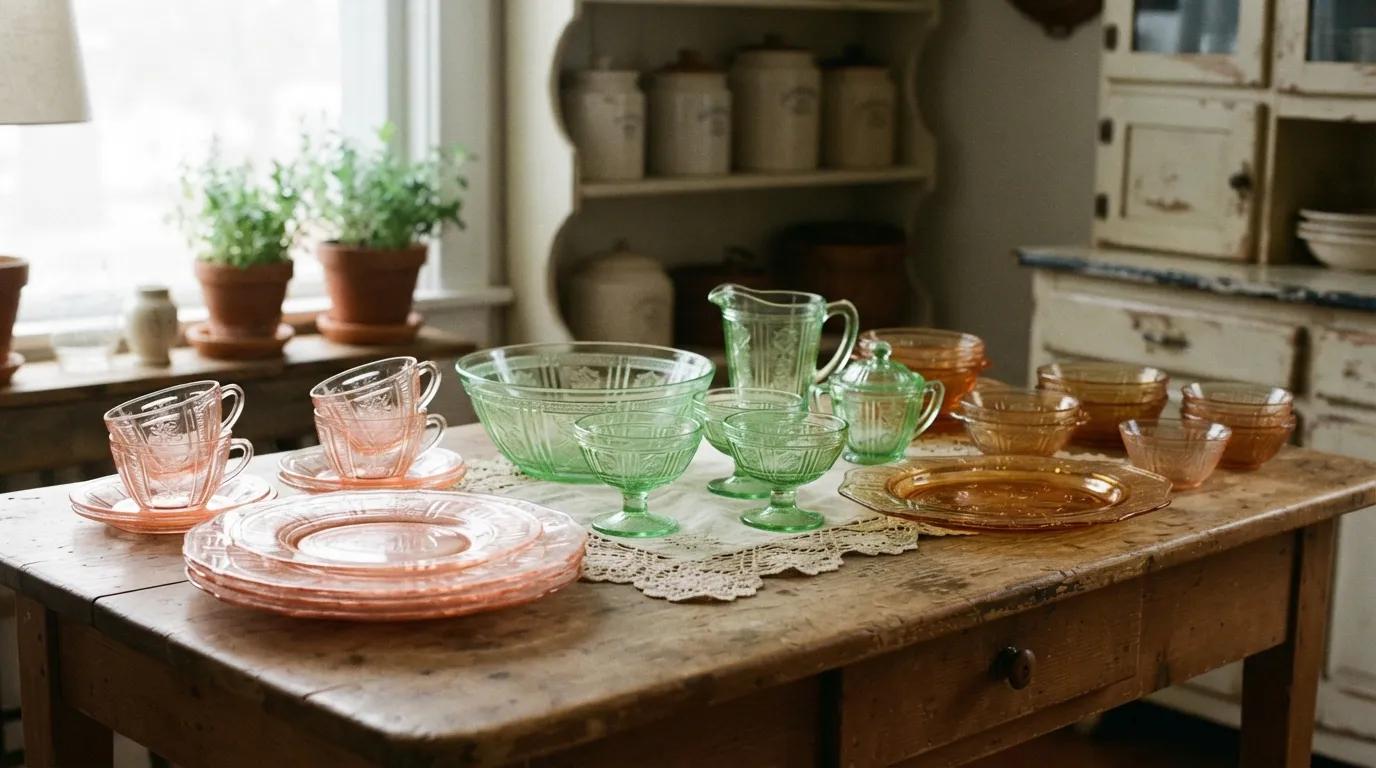
Depression glass was a cheap, molded-pattern alternative to cut glassware in the 1920s. Back then, it was practically given away.
This pastel-colored glassware came from the Great Depression and was often tucked into cereal boxes or grocery bags as a freebie. Grandma didn’t buy it – she earned it with her grocery money.
Pink, green, and amber pieces are especially prized now, and full sets or rare patterns fetch serious money from collectors. Your grandmother’s “everyday dishes” are now sitting behind glass in antique shops.
But that’s nothing compared to what we found about #23…
#23 – The Bread Box
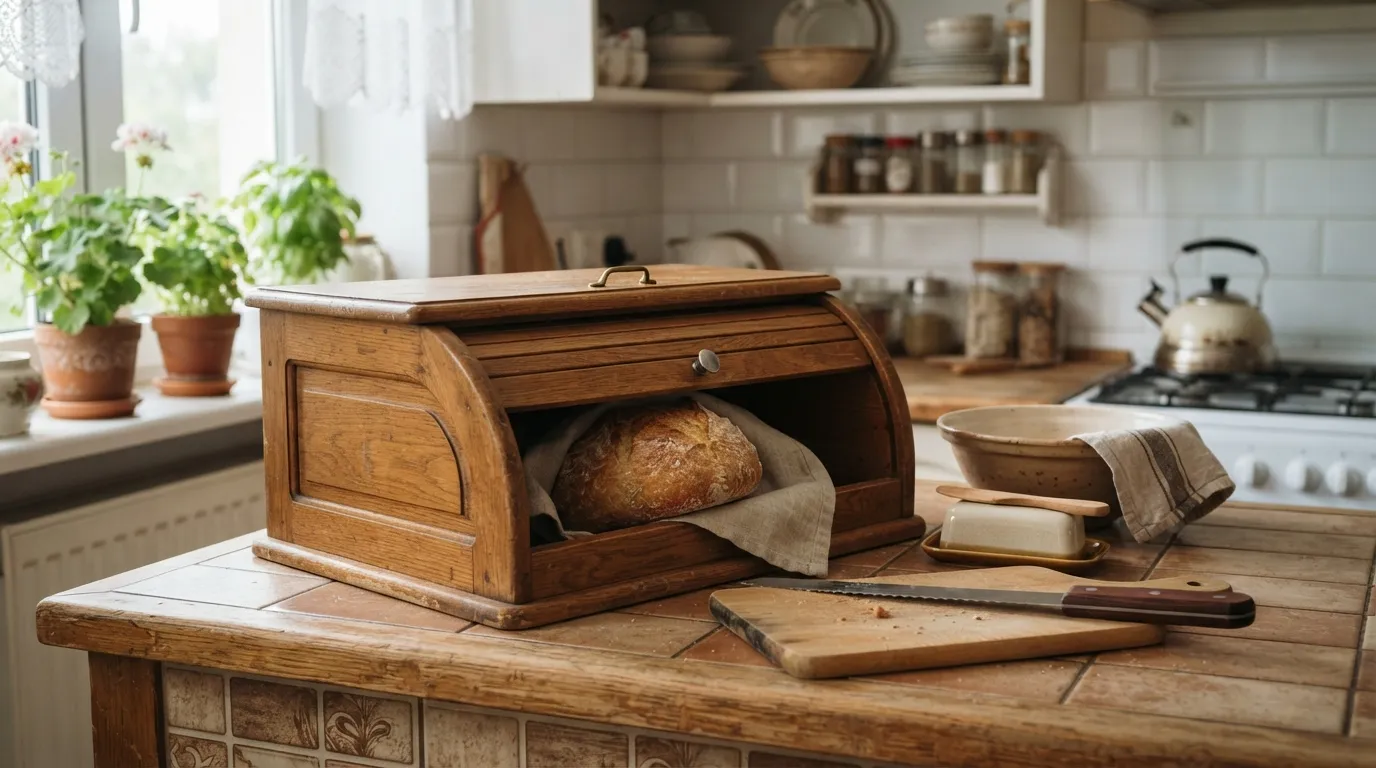
The bread box fell out of fashion, but it never stopped working. It keeps homemade loaves fresher than a plastic bag ever could.
Grandma’s bread never went stale on day two. The bread box regulates humidity in a way plastic simply can’t, and we swapped that science for convenience.
If you’ve got an old one lying around, it makes a nice countertop organizer. But using it for its original job would still serve you better.
But that’s nothing compared to what we found about #22…
#22 – The Flour Sifter
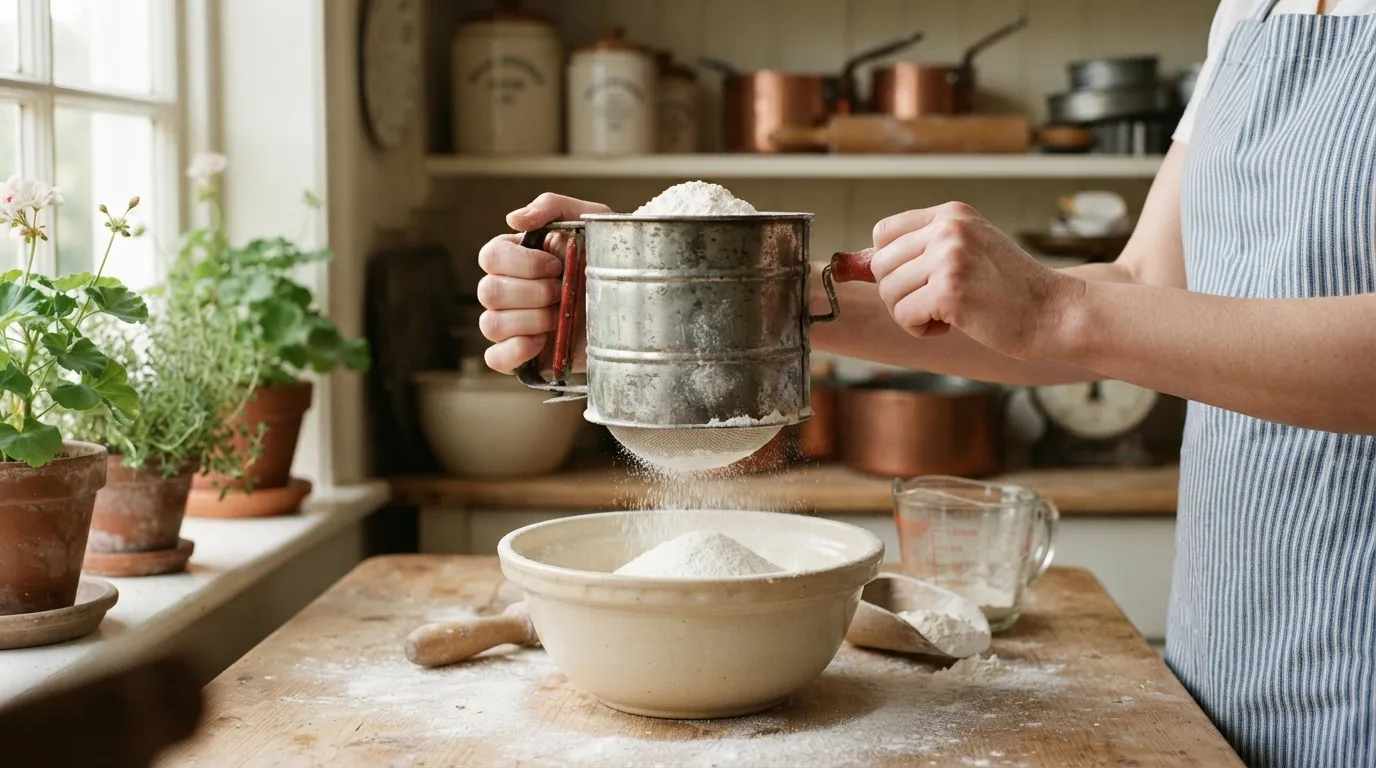
Flour sifters were everywhere by the late 1800s, with a hand crank that pushed flour through mesh so no lumps made it into the bowl. Most modern bakers skip this step entirely.
Sifting isn’t optional for certain baked goods – it’s the difference between light and heavy. Grandma knew this without ever reading a food blog.
Fast Facts
- Patented sifter designs were already being advertised to home bakers by 1865, with Tilden’s Universal Flour Sifter, patented March 28, 1865, among the earliest.
- Some collectors trace the tool back even further, crediting the world’s first flour sifter, patented by Jacob Bromwell in 1819.
- Sifting wasn’t a nicety – for cakes and delicate baked goods, it was treated as a required step, not an optional one.
Vintage ads bragged about how fast a sifter could clear a whole tin of flour. They were efficient and precise – two things we claim to value but rarely practice.
But that’s nothing compared to what we found about #21…
#21 – Jadeite Dishware
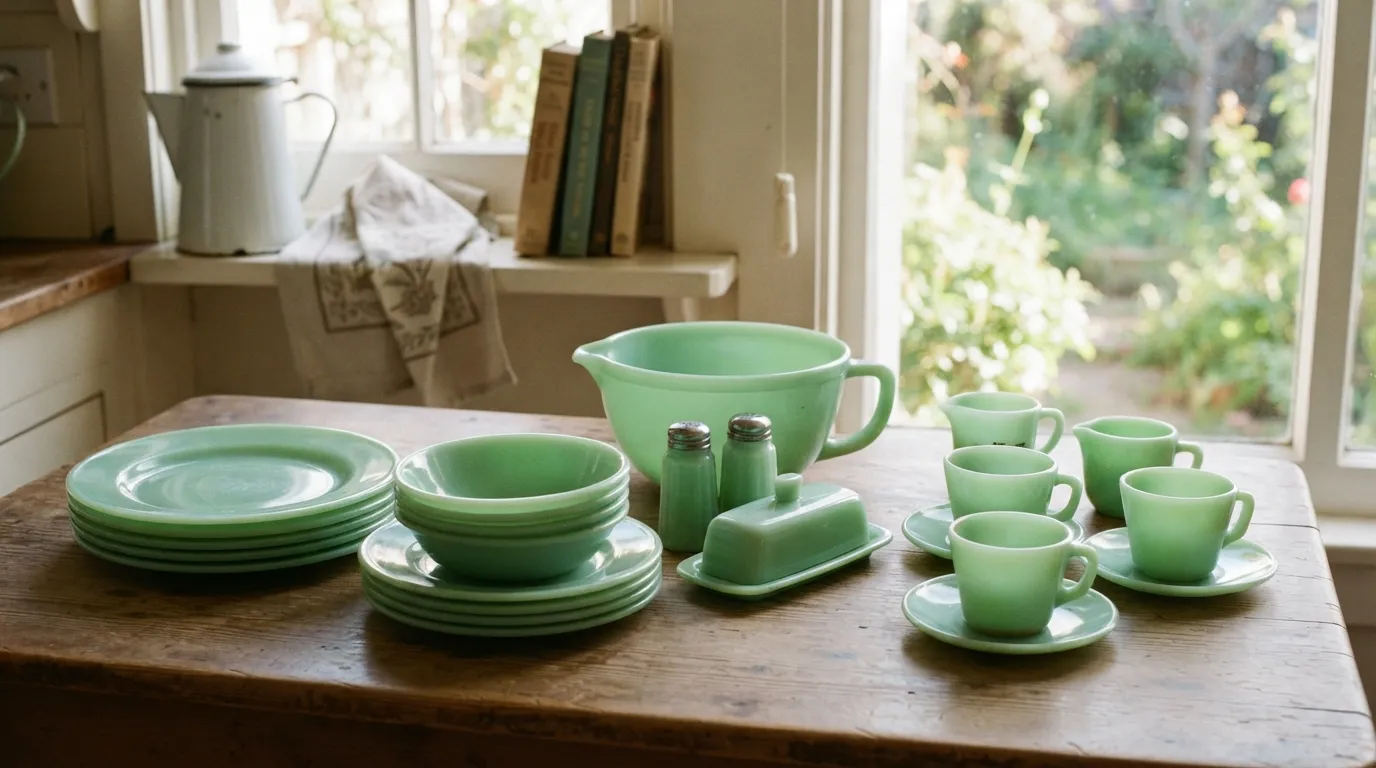
This opaque green glassware ruled American tables from the 1940s through the 1960s, made by companies like McKee and Jeannette Glass. It showed up in diners and family kitchens alike.
Grandma ate breakfast off dishes that are now *museum-quality*. She had no idea. You probably don’t either.
Mint-green jadeite can run anywhere from $5 to over $5,000 depending on condition and rarity. Check the cabinet before you donate anything.
But that’s nothing compared to what we found about #20…
#20 – The Wooden Butter Mold
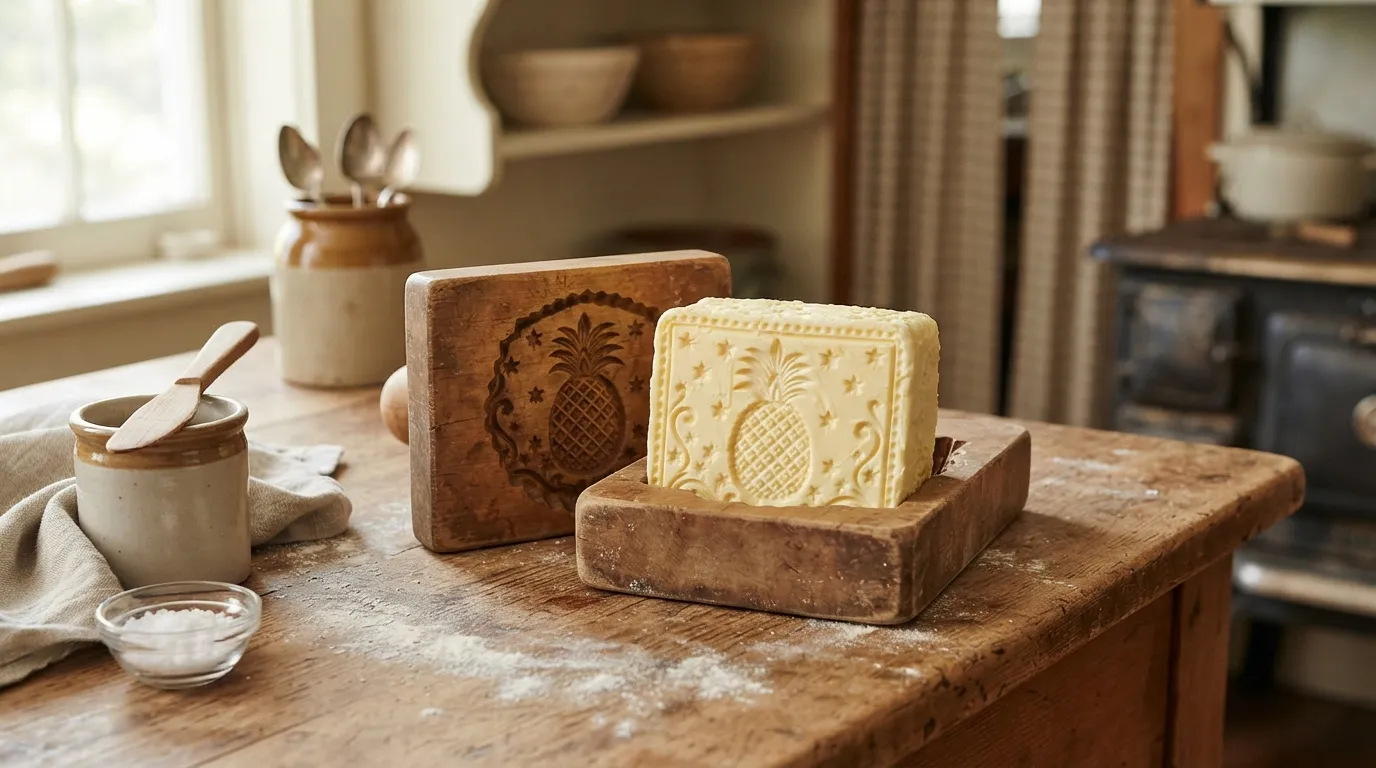
Butter molds were a dairy-farm staple, some stamped with tiny stars like the ones painted on barns. Sunday dinner butter never arrived as a plain, cold rectangle.
We traded a tool that made food beautiful for a foil wrapper. That’s really the whole story of what happened to this one.
Common designs included flowers and pineapples, a popular decorative motif of the era. Grandma’s butter looked like it belonged on a magazine cover.
But that’s nothing compared to what we found about #19…
#19 – The Hand-Crank Egg Beater
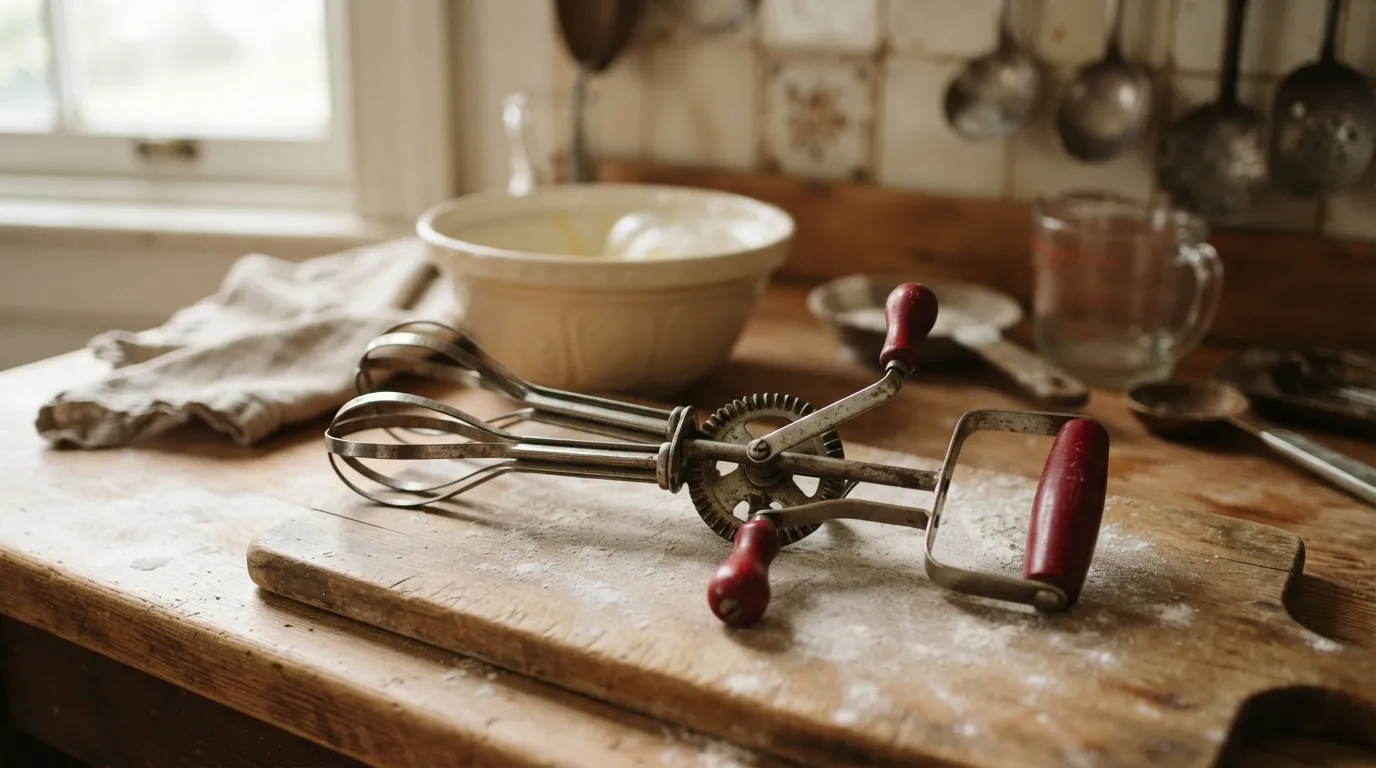
The hand-crank beater arrived in the 1850s and changed everything – suddenly meringue didn’t require aching arms. Two whisk heads spun off a single crank, no electricity required.
Collectors now actively hunt these down. Early 20th-century beaters with colorful handles, especially from Dover and Androck, are surprisingly desirable.
A well-preserved example can fetch $30 to $100 today. It also never breaks down or needs charging.
But that’s nothing compared to what we found about #18…
#18 – The Cookie Jar
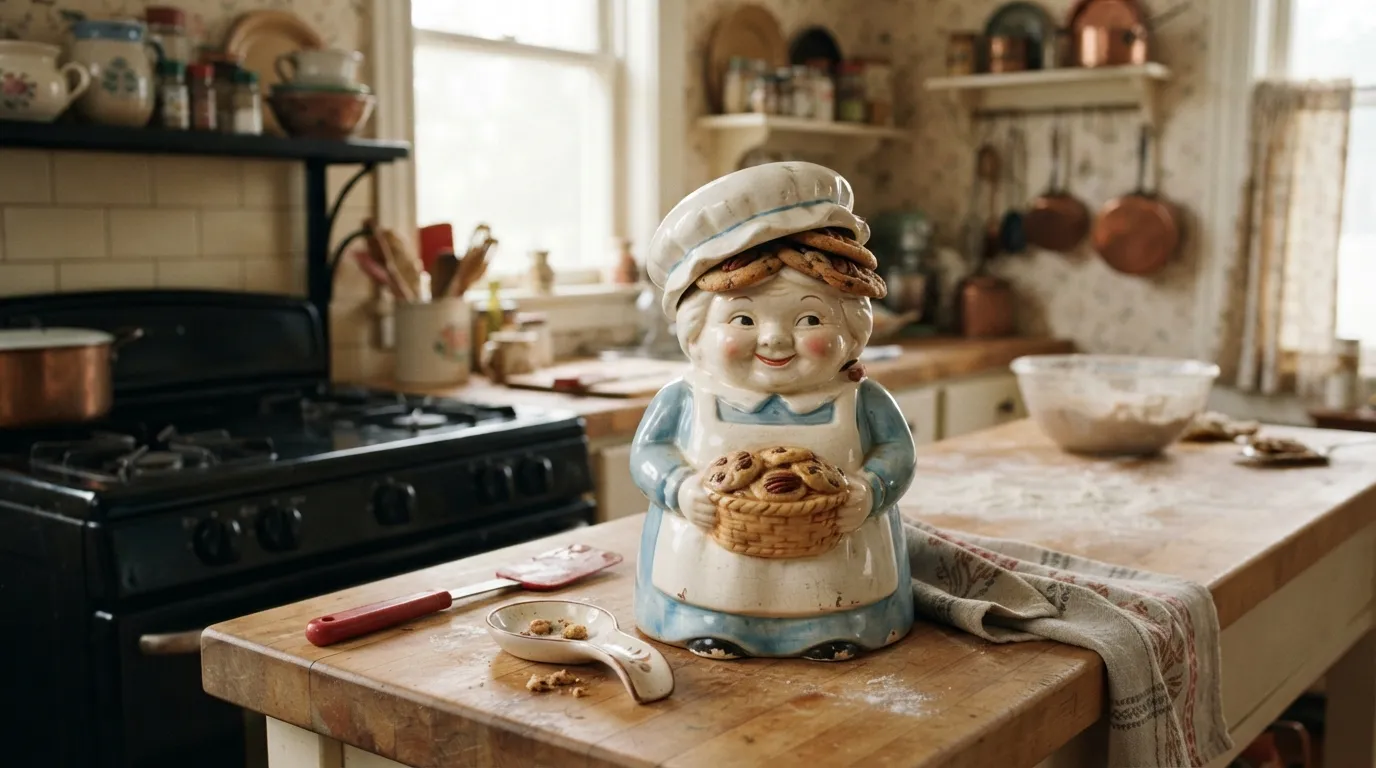
No grandmother’s kitchen was complete without a cookie jar standing guard near the stove. These were rarely subtle – oversized roosters, smiling bears, cheerful characters with a lid for a hat.
The best part? There were always cookies inside. Today’s kitchens have hidden pantries and airtight containers, and somehow there’s never a cookie when you actually want one.
Pottery cookie jars from the 1940s through 1960s can sell from a few hundred dollars to thousands. Pristine, unusual shapes are the most sought-after of all.
But that’s nothing compared to what we found about #17…
#17 – The Jelly Mold
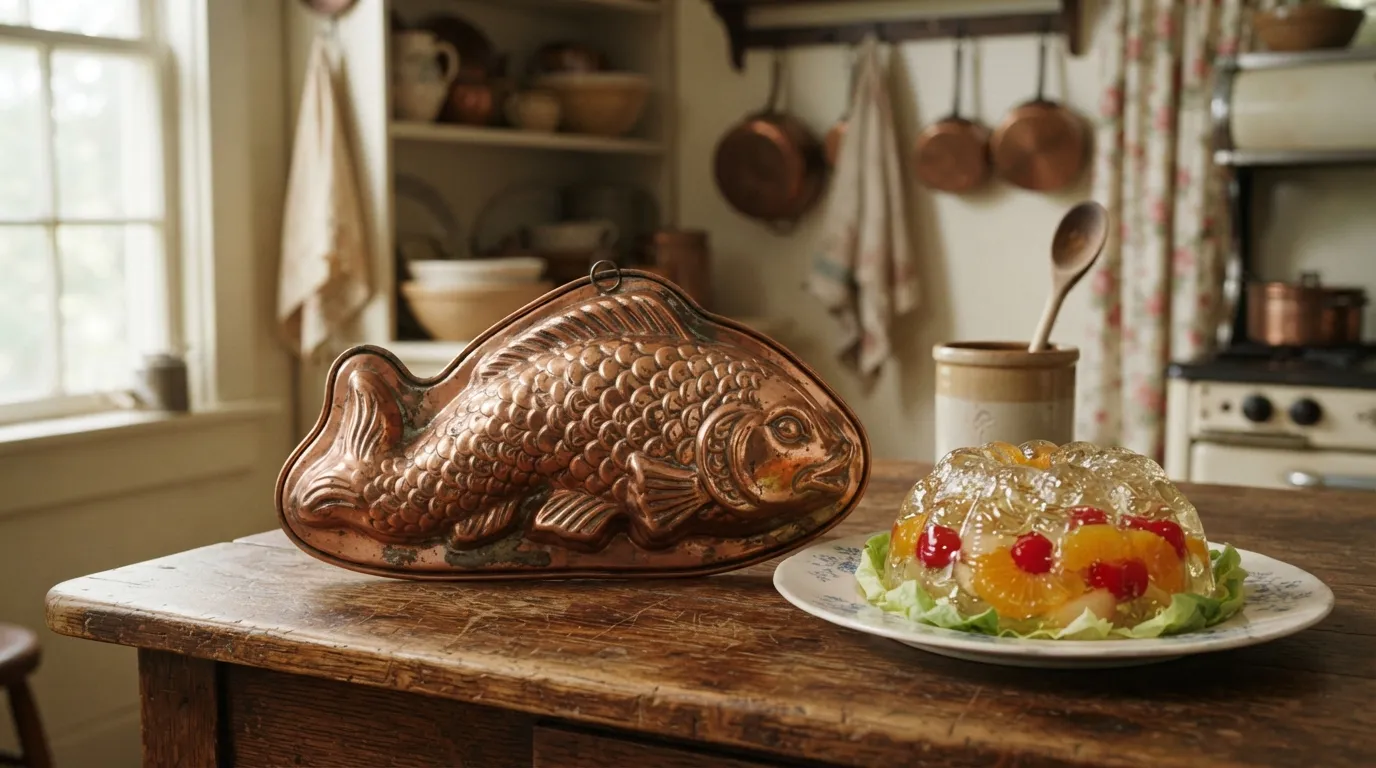
Elaborate copper or ceramic jelly molds turned gelatin desserts and savory aspics into dinner party centerpieces. Bundt-style rings, fish shapes, intricate details – these were never boring.
Say what you want about gelatin salads, but grandma’s table *had drama*. Today we put store-bought dip in a plastic tub and call it hosting.
Copper jelly molds are now legitimate antiques. They routinely sell for far more than anyone paid for them originally.
But that’s nothing compared to what we found about #16…
#16 – Corningware Baking Dishes
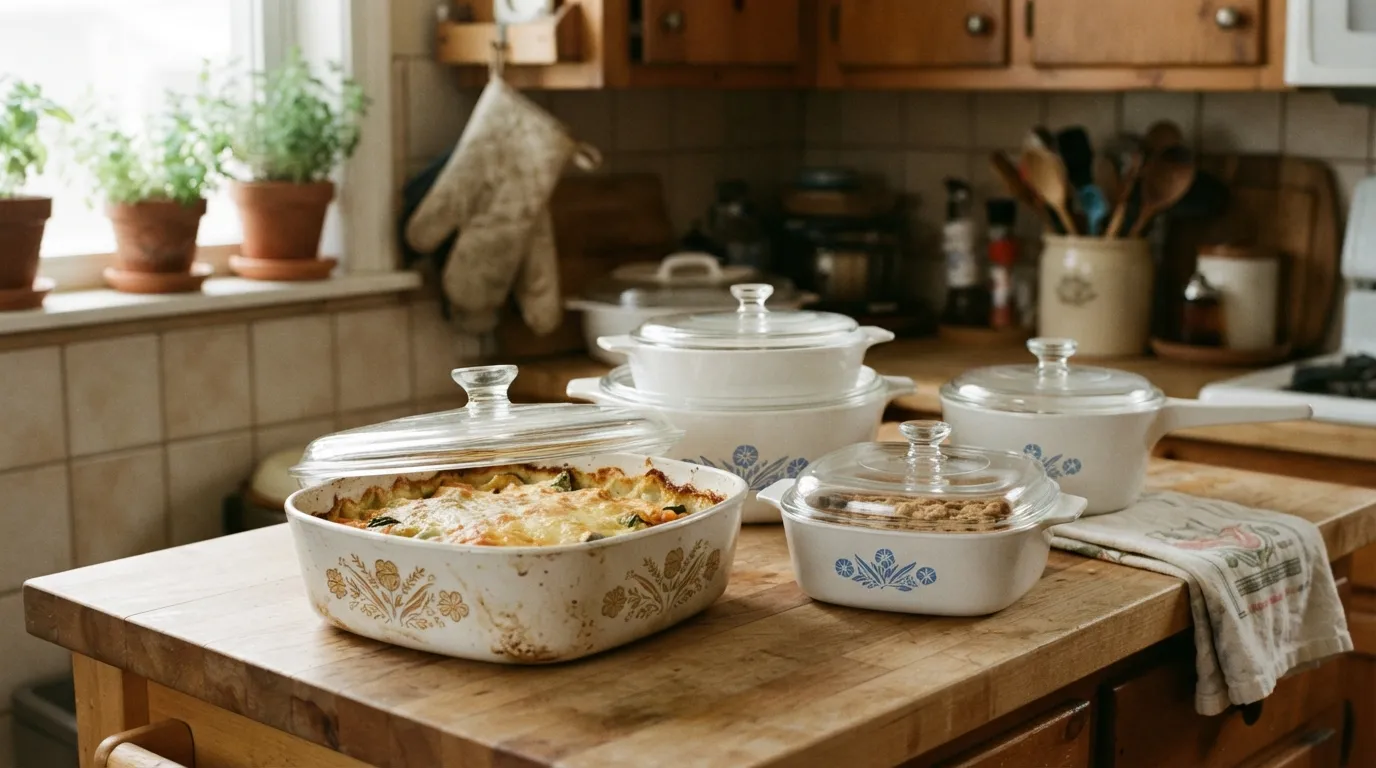
Whether it was the harvest tones of Spice of Life or the calm blue-and-white of Cornflower Blue, Corningware was a must-have in vintage kitchens. These weren’t just pretty – they were *engineered*.
The glass-ceramic could go from freezer to oven to table without shattering. Plenty of modern bakeware still can’t match that range.
The “everyday” bakeware Grandma used is now a collector’s item. Complete vintage sets command real money at antique markets. Let that sink in.
But that’s nothing compared to what we found about #15…
#15 – Sterling Silver Serving Pieces
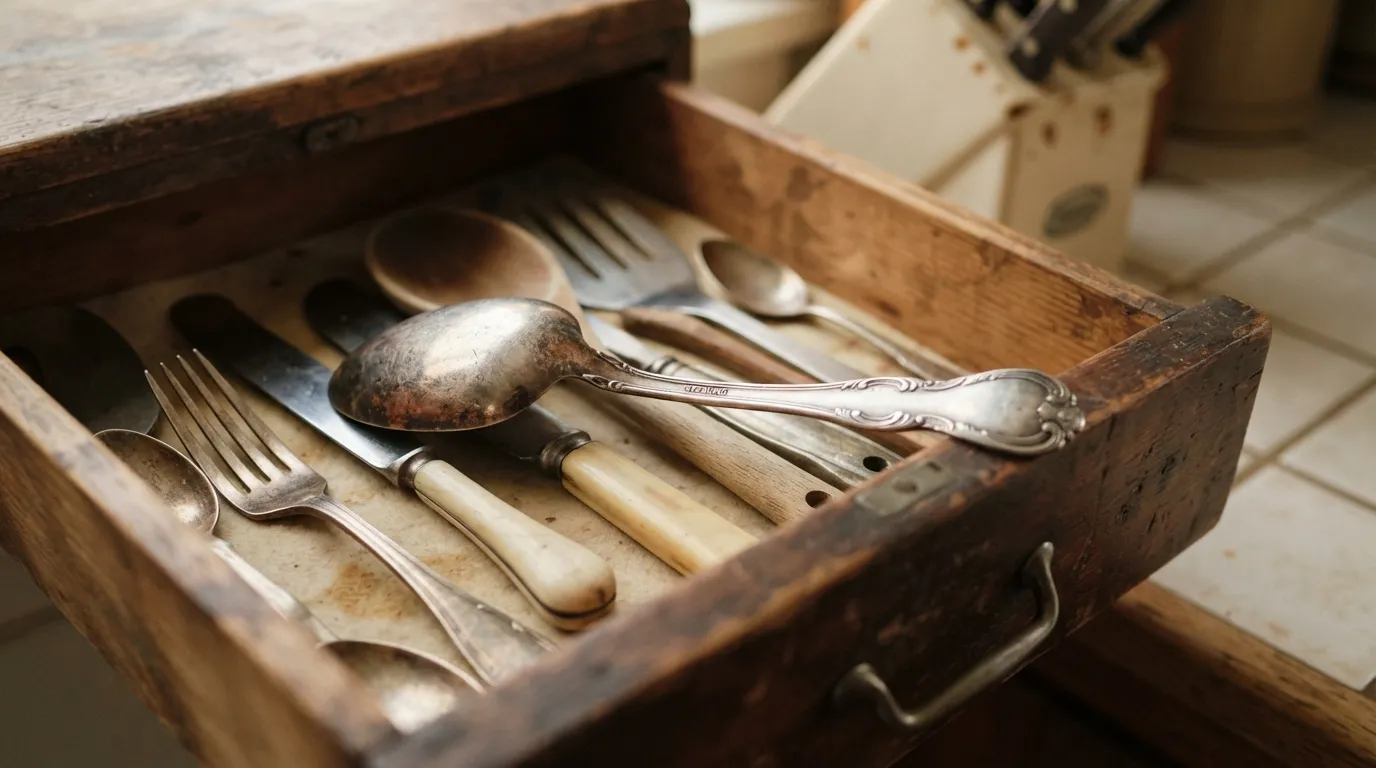
Receiving silver as a wedding gift was common for earlier generations, which is why stray sterling pieces still turn up in grandma’s kitchen drawers. Grandma served mashed potatoes with a silver spoon – literally.
Today we have plastic spatulas from a fast-fashion kitchen brand that snap in six months. Anything genuinely sterling carries value, even as a lone piece.
Most people don’t even know how to identify sterling silver. That’s exactly why it ends up in garage sales for pocket change.
But that’s nothing compared to what we found about #14…
#14 – The Tin Canister Spice Rack
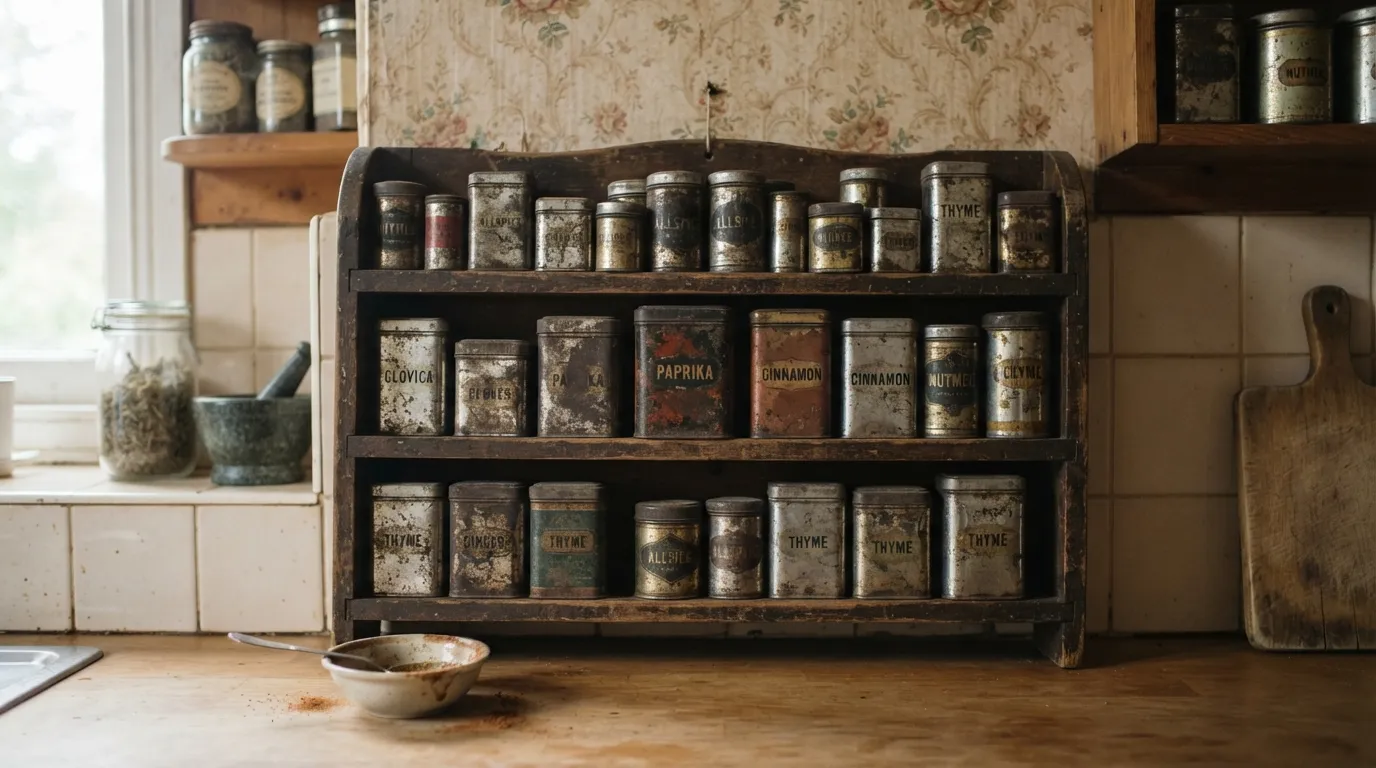
The spice rack is the most universal part of grandma’s kitchen – rows of tiny jars, some older than you, labels faded, paprika gone brown. Nothing ever got thrown away.
Earlier generations treated waste and storage carefully. Spices were bought deliberately and kept for years, which clashes with today’s obsession with freshness.
Grandma’s spice wall was a philosophy, not just a habit. Nothing left her kitchen without a purpose.
But that’s nothing compared to what we found about #13…
#13 – The Meat Tenderizer Mallet
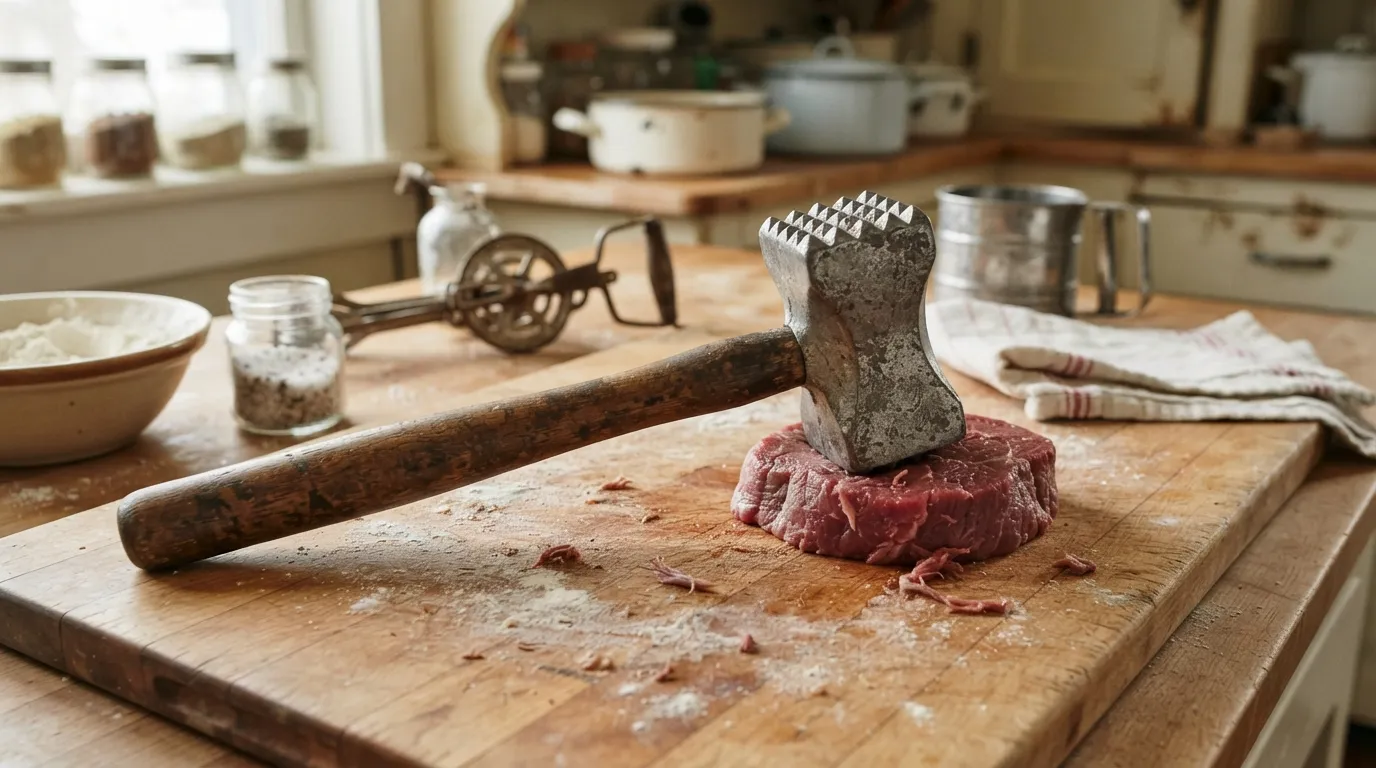
Grandma’s kitchen drawers were basically a toy box – a hand-crank mixer here, an egg separator there, a flour-sifter tin, a meat-tenderizer mallet. The mallet actually changed the texture of cheap cuts of meat into something worth eating.
Grandma didn’t buy tenderloin – she turned a tough round steak into a Sunday dinner with physics. Today we buy pre-marinated meat in plastic and overcook it anyway.
The mallet is gone, and so is the technique. These tools weren’t decoration – they were a whole system.
But that’s nothing compared to what we found about #12…
#12 – Copper Pots
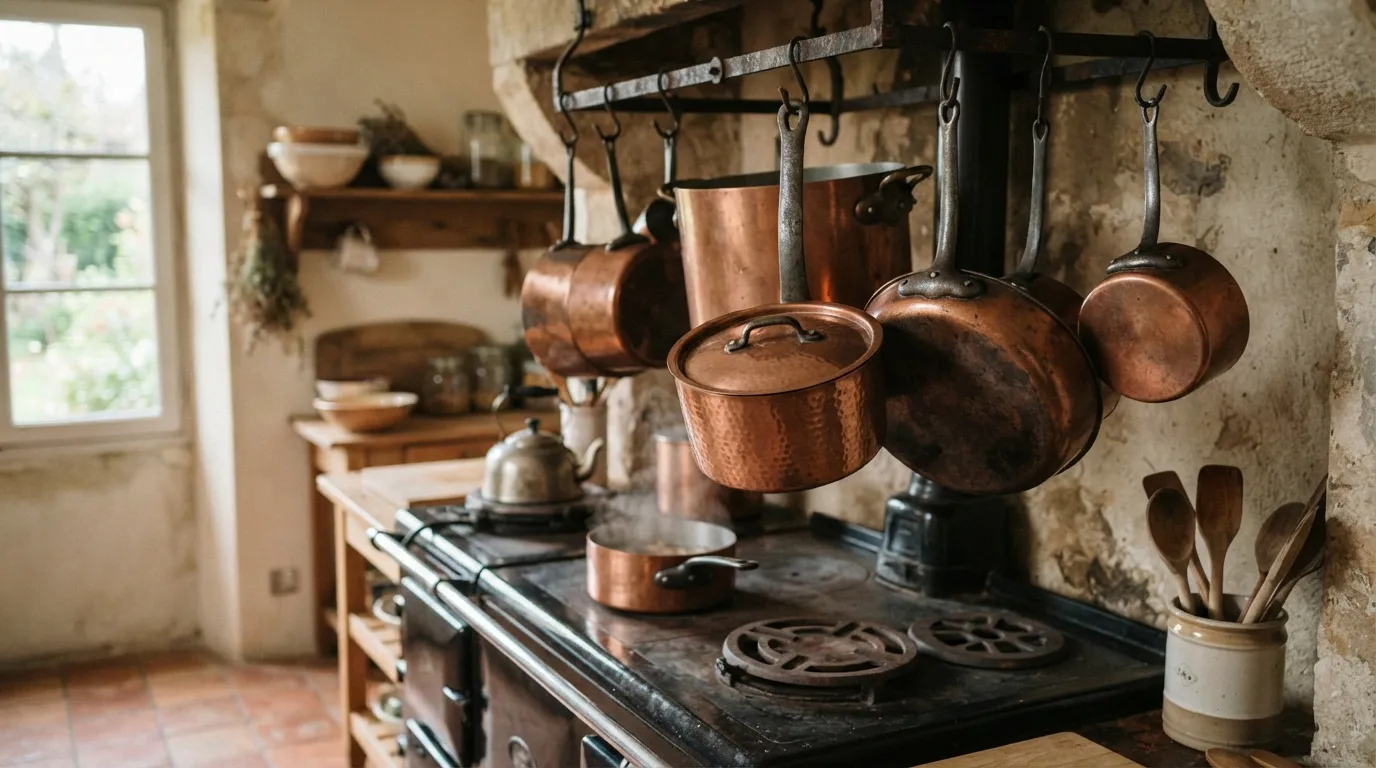
As a metal, copper carries inherent value, so it’s no surprise copper pots are among the most valuable finds in grandma’s kitchen. Professional chefs still reach for copper when precision actually matters.
Heat distribution in copper is dramatically more responsive than stainless steel – you get instant control. Grandma cooked on copper because it worked, not because it was trendy.
A vintage copper saucepan is genuinely superior to most modern equivalents. It’s also worth serious money at estate sales.
But that’s nothing compared to what we found about #11…
#11 – The Butter Crock
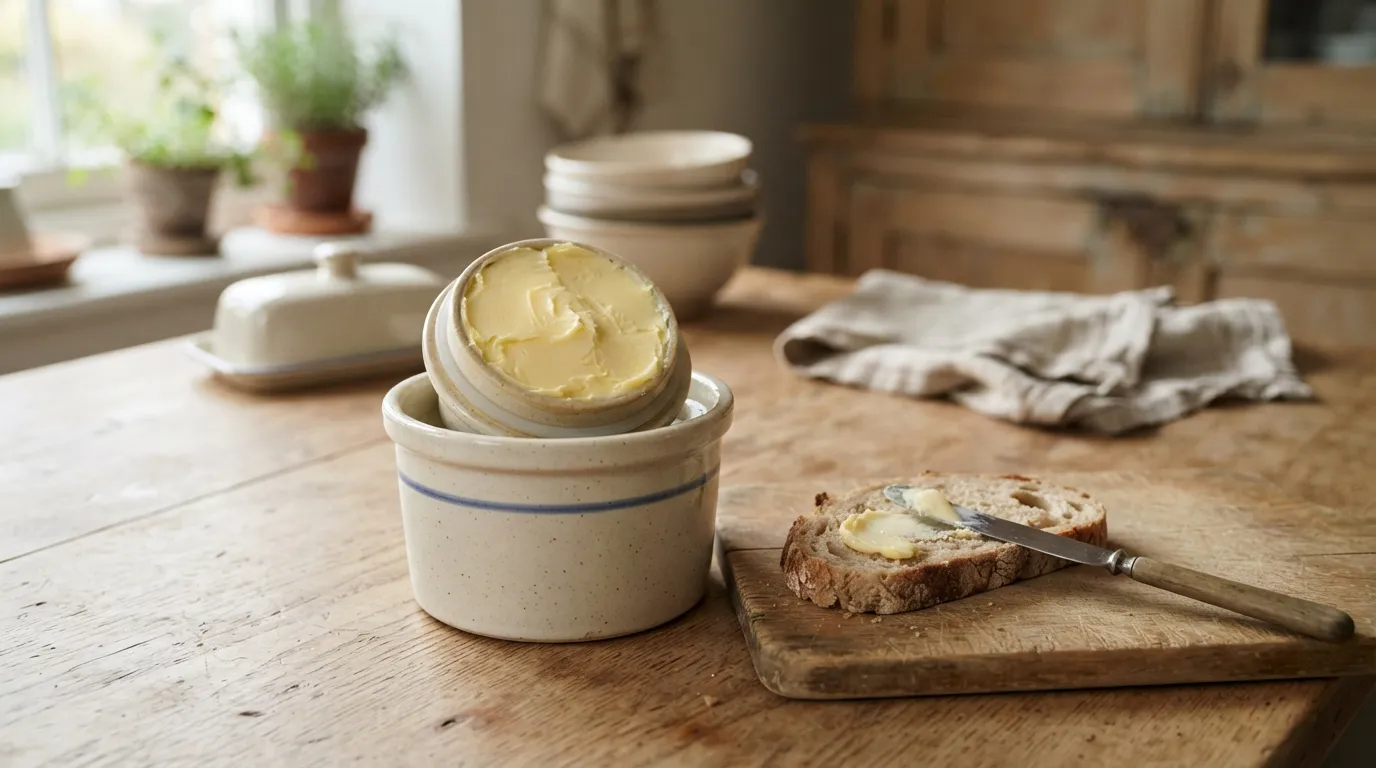
We keep butter in the fridge now, but grandma relied on a crock to keep hers fresh and always spreadable. No tearing bread trying to fight cold butter.
A French butter crock uses a small water seal to keep butter safe at room temperature for weeks. This is not old-fashioned guesswork – it’s basic food science.
Quick Compare
- Butter crock: keeps butter fresh for up a month without refrigeration, sealed only by a thin layer of water.
- Upkeep required: change the water every 2-3 days to keep it fresh.
- Refrigerator: keeps butter safe indefinitely, but leaves it too firm to spread straight out of the fridge.
The refrigerator made us lazier, not smarter, about butter storage. These crocks are making a well-deserved comeback.
But that’s nothing compared to what we found about #10…
#10 – Fiestaware Dinnerware
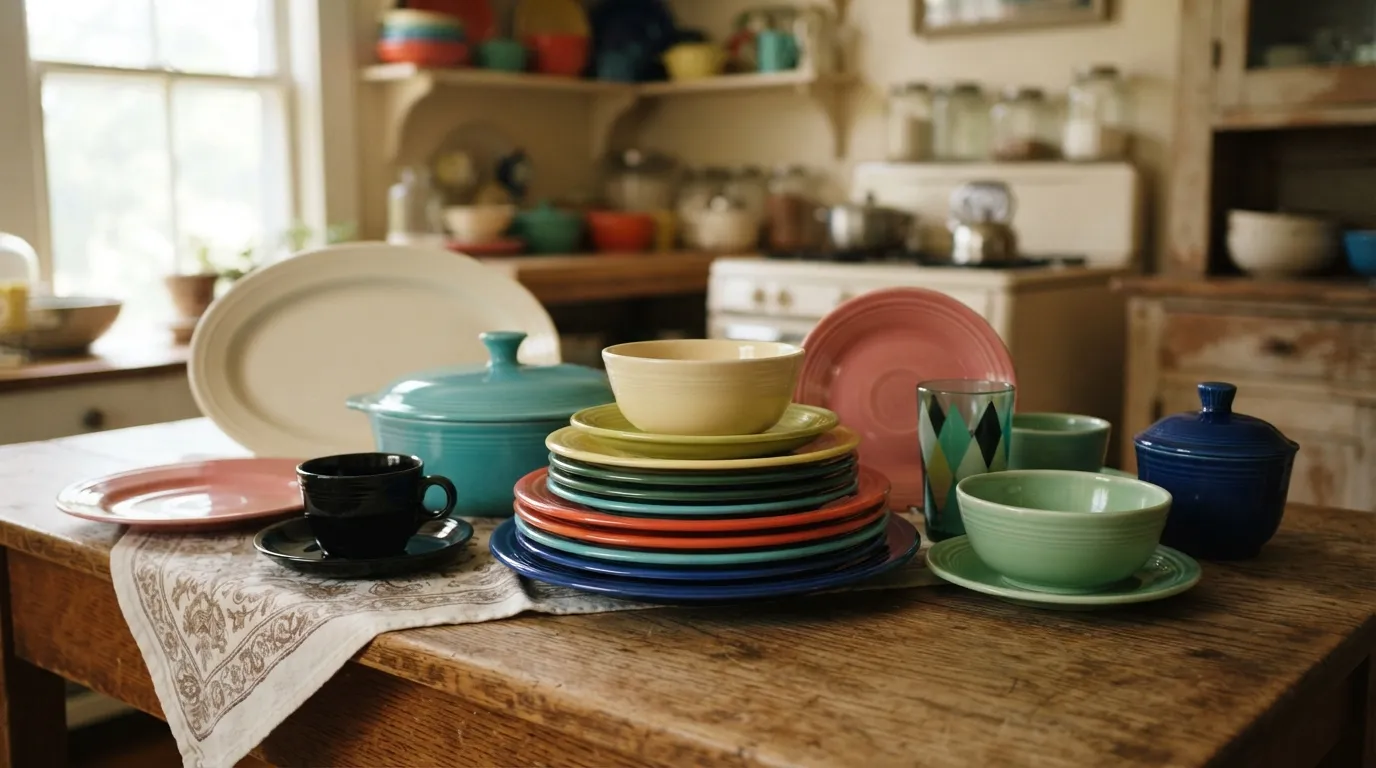
Fiestaware’s vibrant colors debuted in 1936 and graced tables for decades before being discontinued in the 1970s. Pieces from that original run are wildly in-demand now.
The original glazes are chemically different from modern reissues. Collectors specifically hunt the originals for their color depth and manufacturing quality.
Fiestaware is often worth more than something you’d sell at a garage sale.
Antiques Roadshow appraiser
Plenty of people have sold it at garage sales, not knowing what they had. Don’t make that mistake.
But that’s nothing compared to what we found about #9…
#9 – The Wooden Rolling Pin
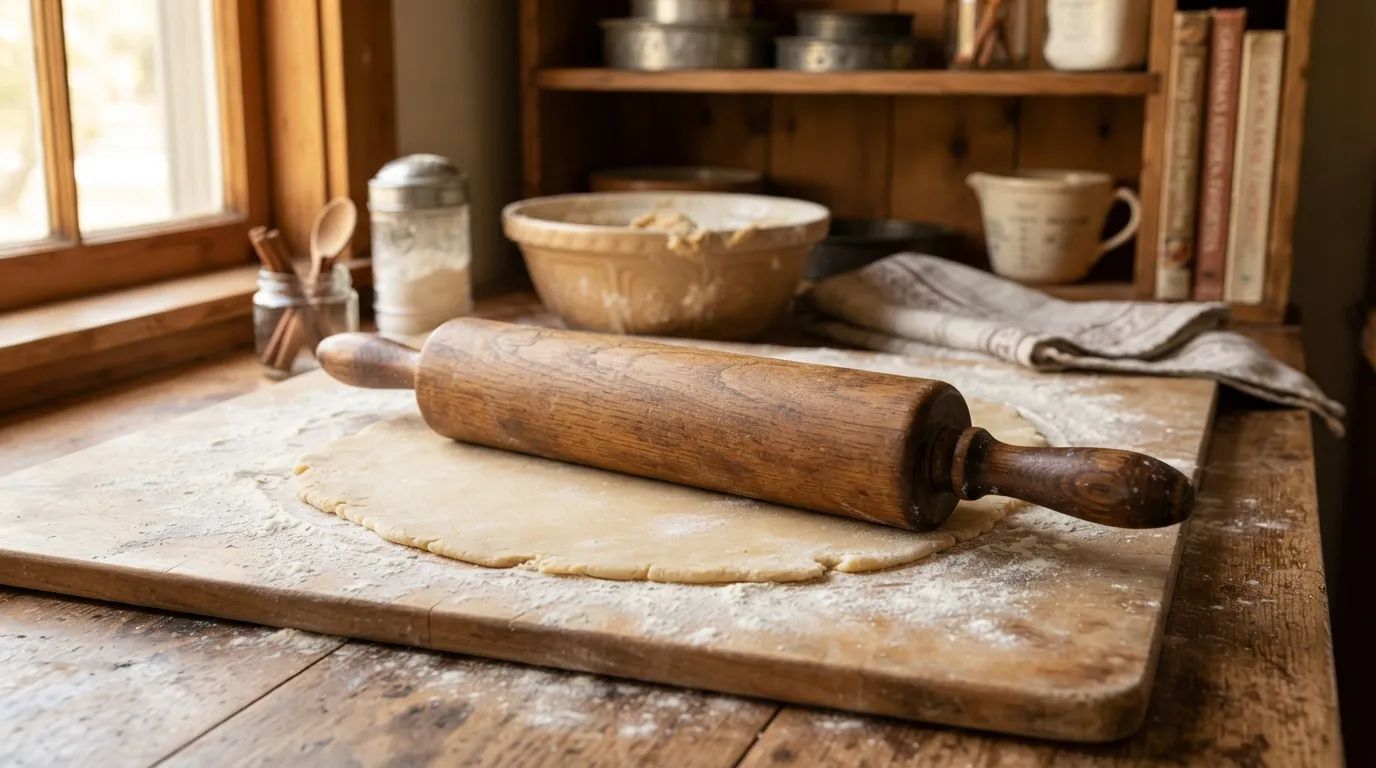
A retro wooden rolling pin with a carved handle is one of the more charming vintage kitchen finds. Grandma’s was heavy, balanced, and used every single week.
A well-weighted wooden rolling pin gives you more control over dough thickness than any modern silicone version. Bakers who switch back rarely go back again.
These pins are gaining real value with collectors and home bakers alike. Functional *and* valuable – grandma wins again.
But that’s nothing compared to what we found about #8…
#8 – The Handwritten Recipe Box
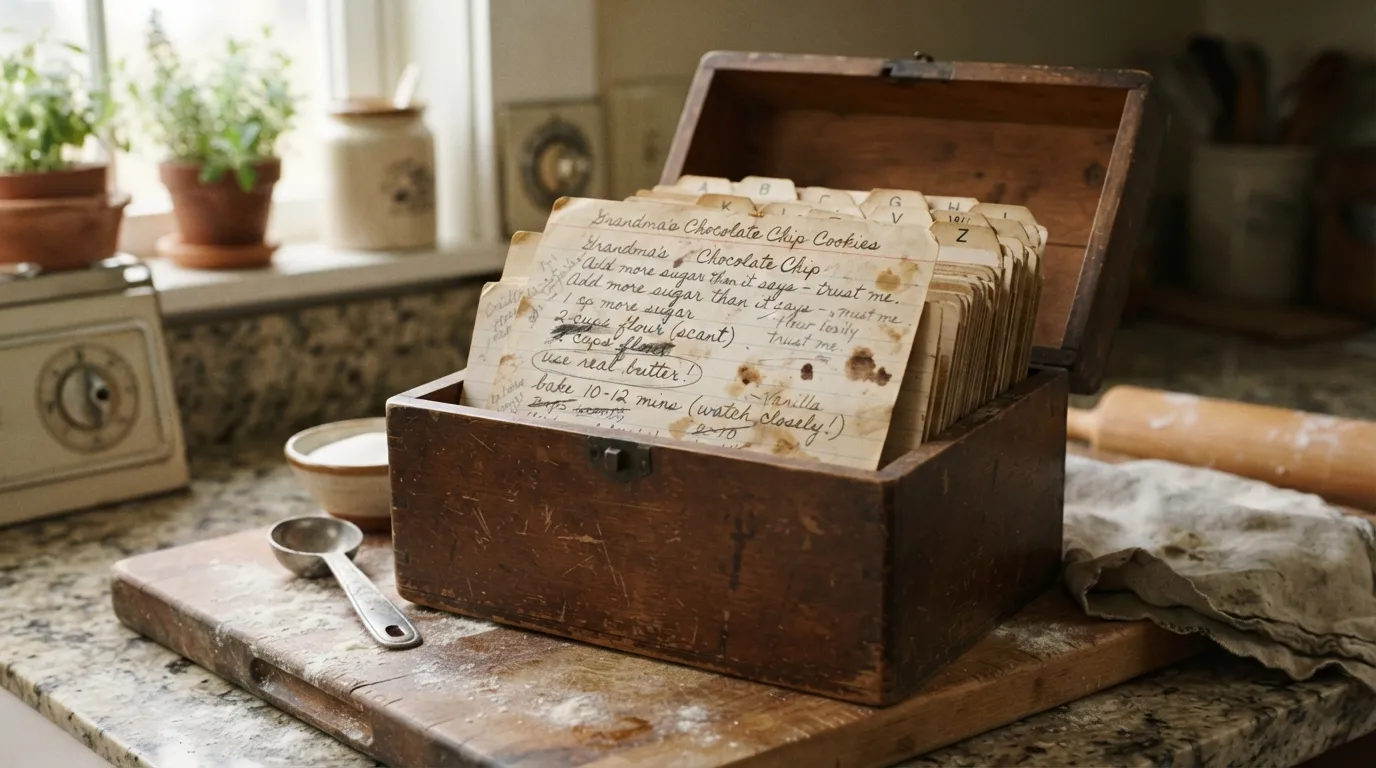
Grandma’s recipe box was a living document – vanilla smudges, margin notes, crossed-out measurements, updates in pencil. A digital file can’t replicate any of it.
You can screenshot a recipe online. You cannot screenshot the note that says “add more sugar than it says – trust me.”
That annotation is the actual recipe. The printed proportions were only ever a starting point.
But that’s nothing compared to what we found about #7…
#7 – The Butter Churn
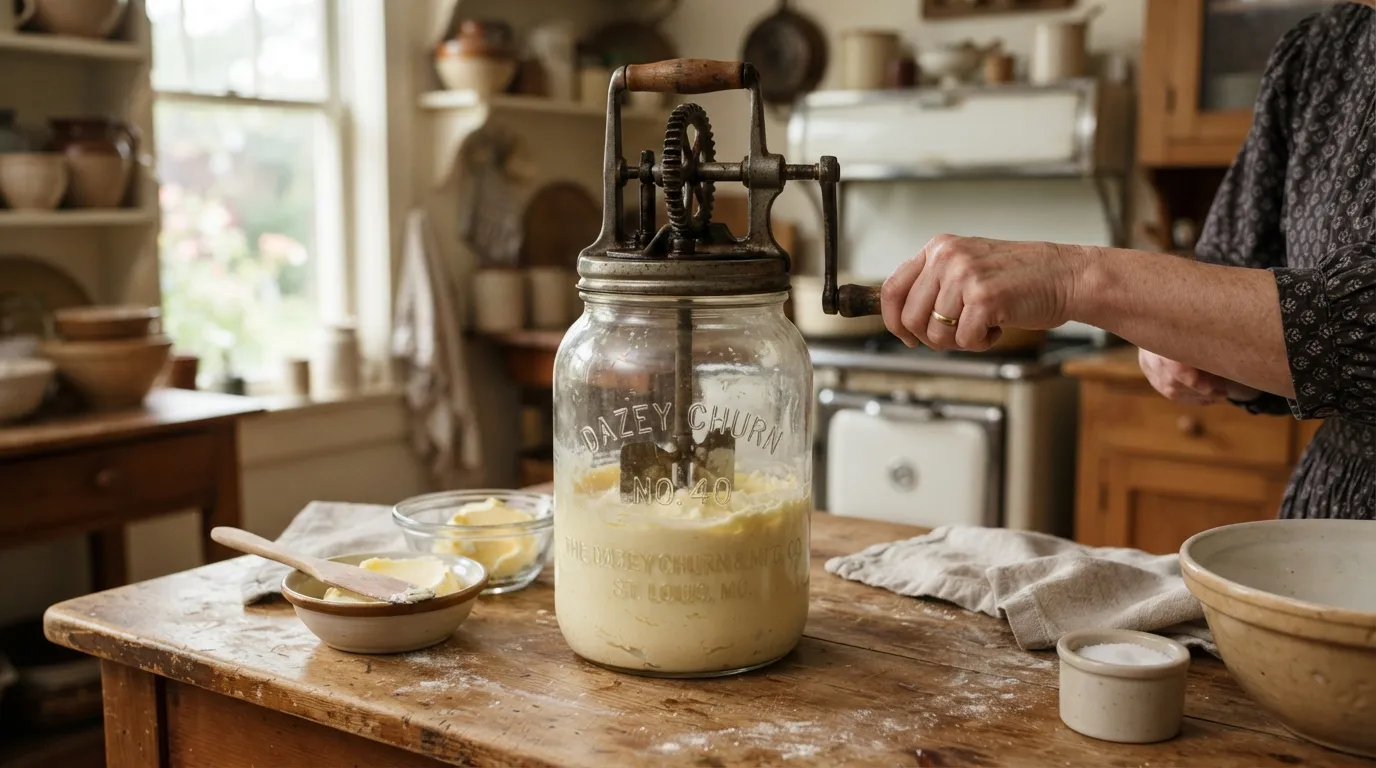
Old-fashioned butter churns – glass or wooden, hand-cranked – are worth a fortune to collectors now for their rustic charm. But grandma’s churn wasn’t just nostalgic.
Before commercial dairy took over every grocery aisle, households made their own butter and controlled the fat content, freshness, and flavor. You cannot buy that level of control in any supermarket.
Complete churns with all parts intact sell for $200 to $500 depending on age and condition. One with a manufacturer’s mark is worth even more.
But that’s nothing compared to what we found about #6…
#6 – The Pyrex Mixing Bowl Set
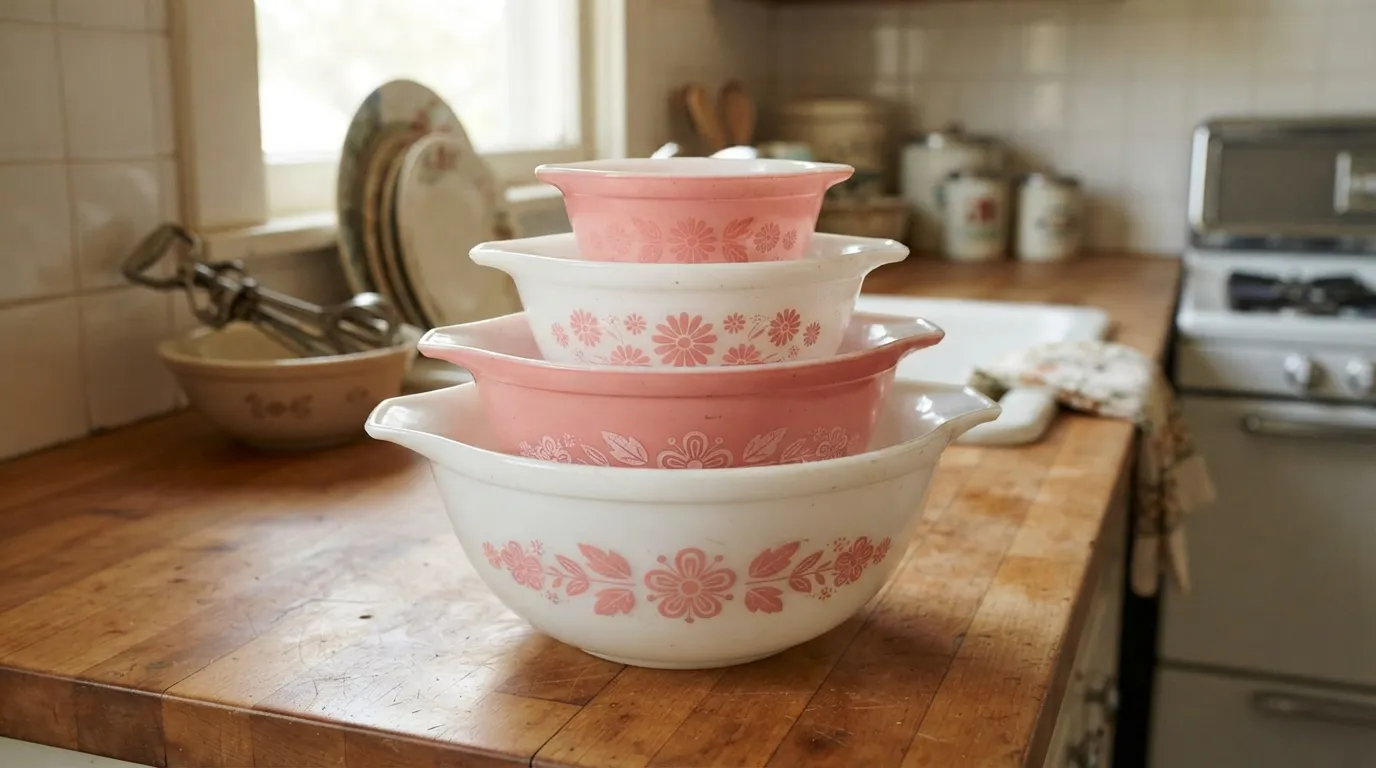
Pyrex was the backbone of a vintage kitchen – cheerful patterns that moved straight from oven to table. They stacked, they nested, they went fridge to oven without cracking.
Patterns like “Butterprint,” “Gooseberry,” and “Pink Daisy” now have a genuine cult following. What seemed ordinary back then is a holy grail for collectors today.
Worth Knowing
- Butterprint, Gooseberry, and Pink Daisy are among the most chased patterns among today’s collectors.
- Many original owners tossed these exact bowls in the 1980s when plain white kitchenware became the trend.
- Complete, matching nesting sets are far rarer – and far pricier – than single bowls sold alone.
Most people threw these away in the 1980s when “modern” white was trending. That decision now costs hundreds of dollars to undo at antique markets. Grandma never got rid of hers. Of course she didn’t.
But that’s nothing compared to what we found about #5…
#5 – The Chrome Toaster
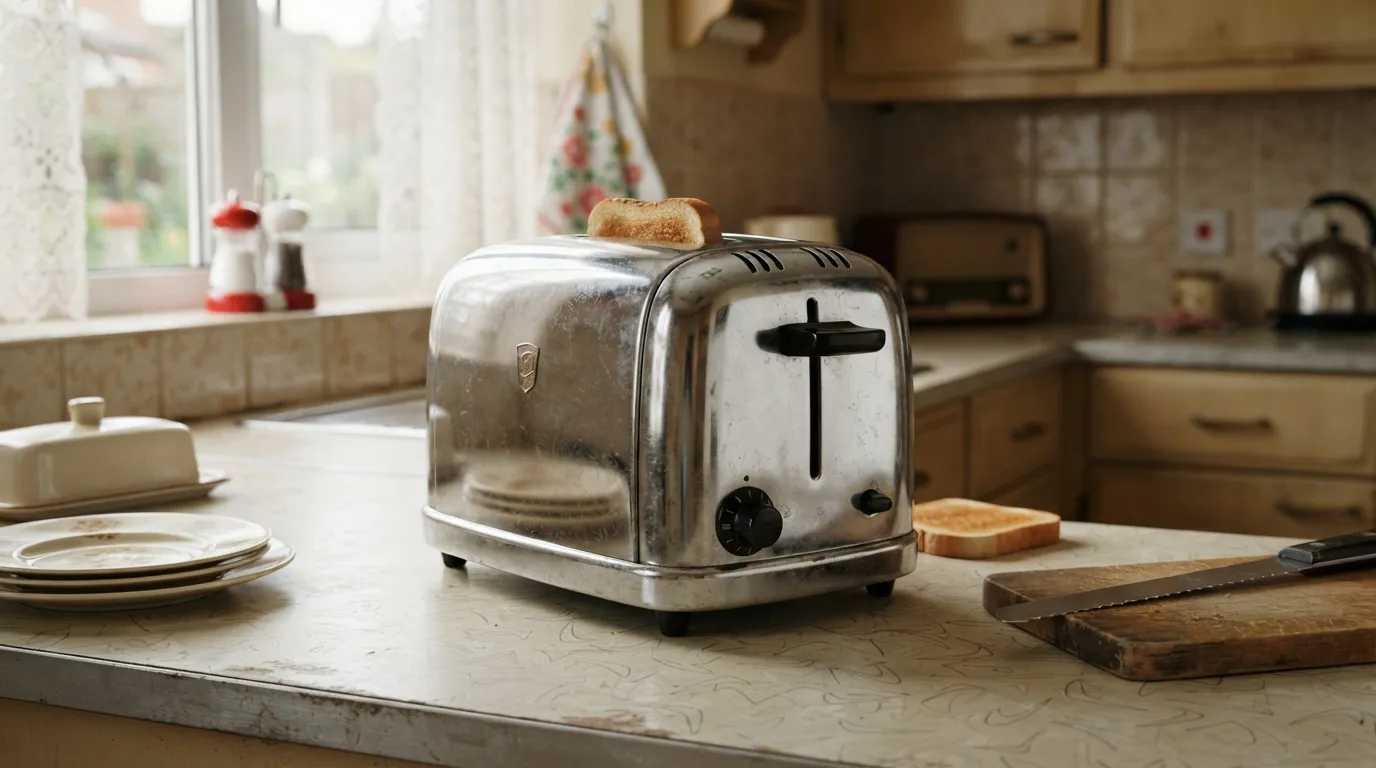
The chrome toaster, gleaming and rounded, captured the futuristic optimism of the 1950s breakfast table. That polished look still shapes new appliance design decades later.
Modern toasters are made of plastic and last about three years. Grandma’s chrome toaster ran for *decades* on simple mechanics and heavy-gauge metal.
Original midcentury toasters with working levers and intact logos now appeal to collectors and stylists alike. Repaired. Not replaced. What a concept.
But that’s nothing compared to what we found about #4…
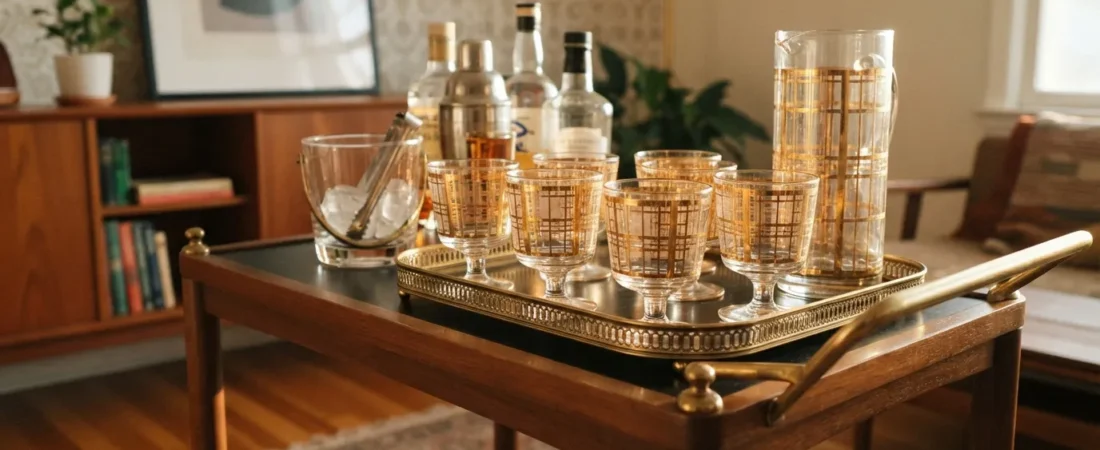
#4 – The Midcentury Barware Set
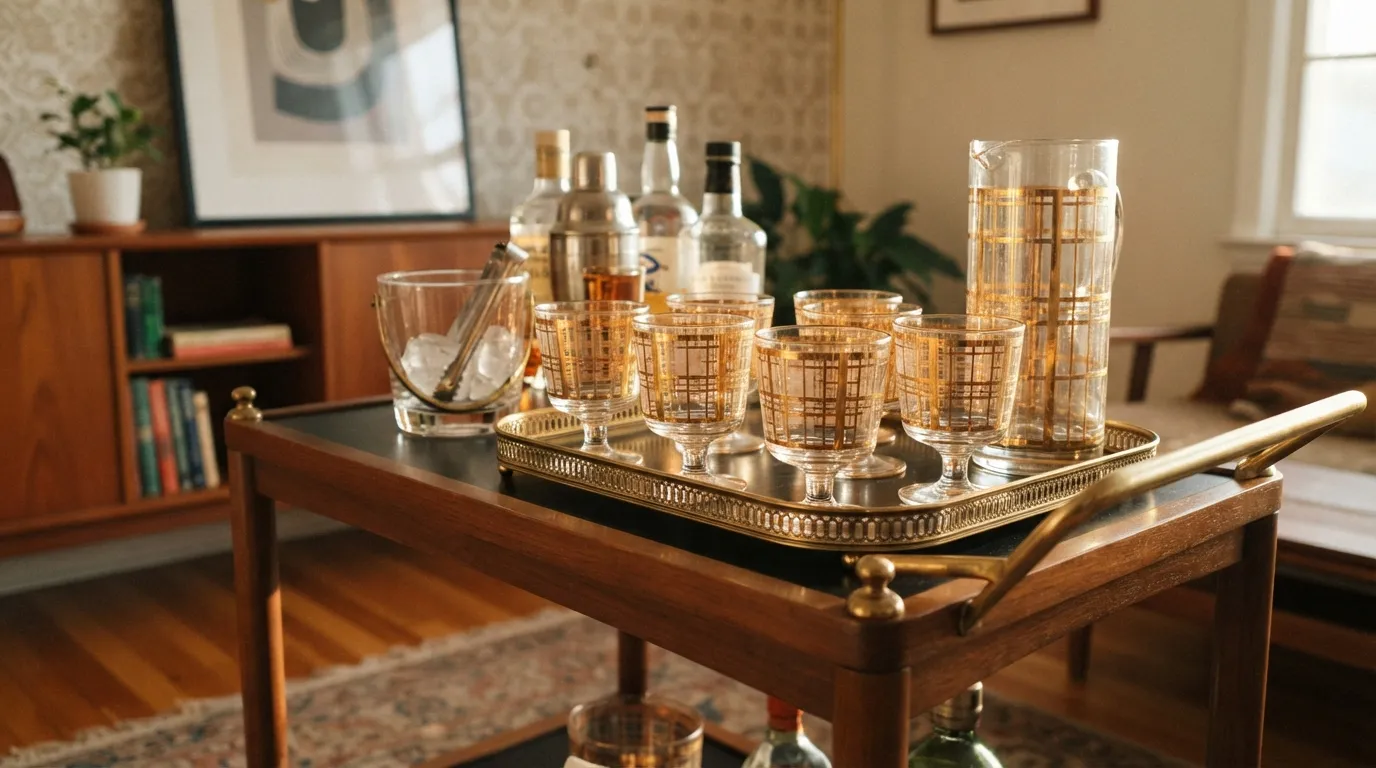
Imperial Glass Golden Shoji glasses, with their 22K gold detailing, are a genuine collector’s dream. Grandma kept hers in the highest cabinet, used only for company.
Today’s “entertaining” involves stemless wine glasses that scratch in the dishwasher. Grandma’s bar cart was a commitment to elegance on an ordinary budget.
Every piece was chosen to impress, and most of it has outlasted everything made since. It felt like a special occasion just by existing on the shelf.
But that’s nothing compared to what we found about #3…
#3 – The Lard Can
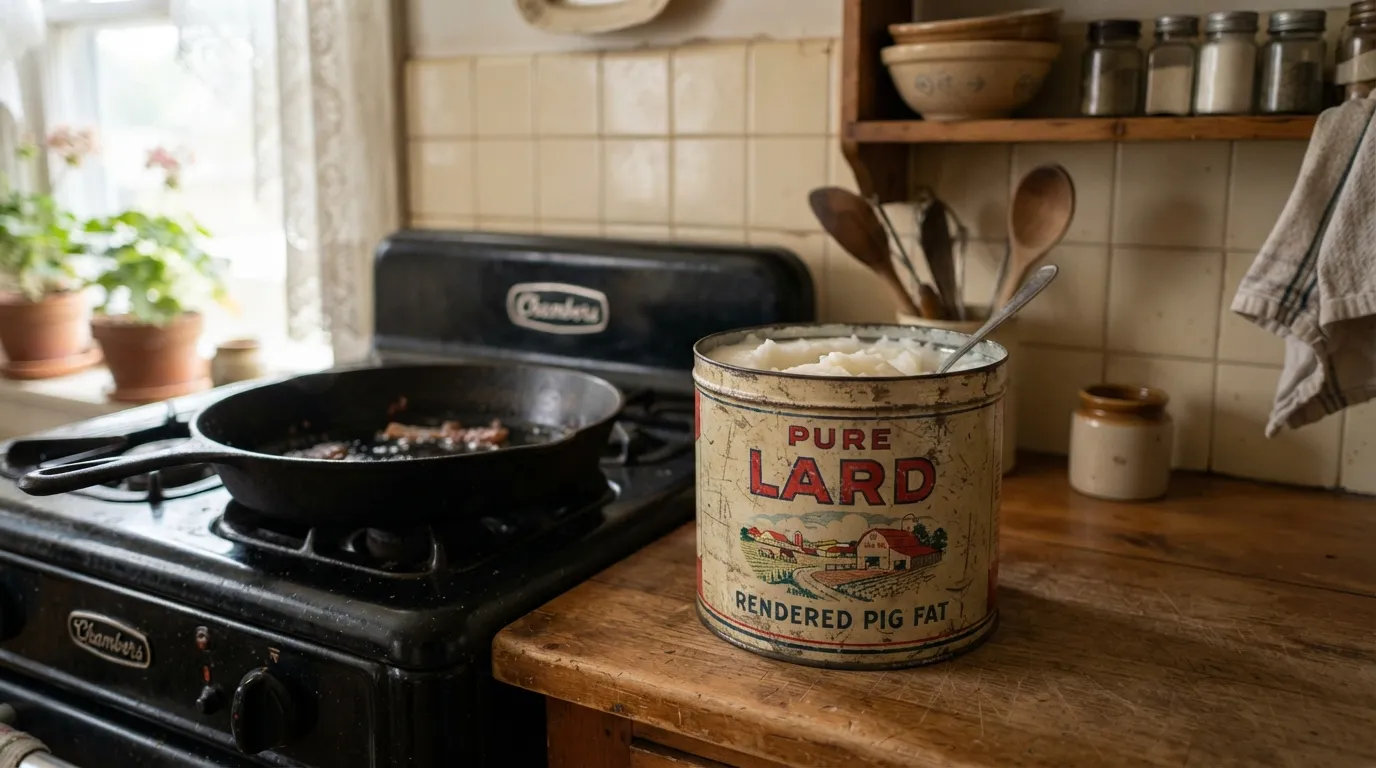
This one is controversial, and that’s exactly why it matters. Before vegetable oil took over in the 1950s and 60s, rendered lard was the fat of choice in virtually every American kitchen.
Grandma kept it in a dedicated tin near the stove, always within reach. The dark seasoning layer on an heirloom skillet is really a polymerized history of decades of lard, bacon grease, and butter.
Nutritional scientists have since revised many of the 1960s-era warnings about animal fats. No modern kitchen has a lard can – every modern kitchen is quietly missing something fundamental.
But that’s nothing compared to what we found about #2…
#2 – The Cast Iron Skillet
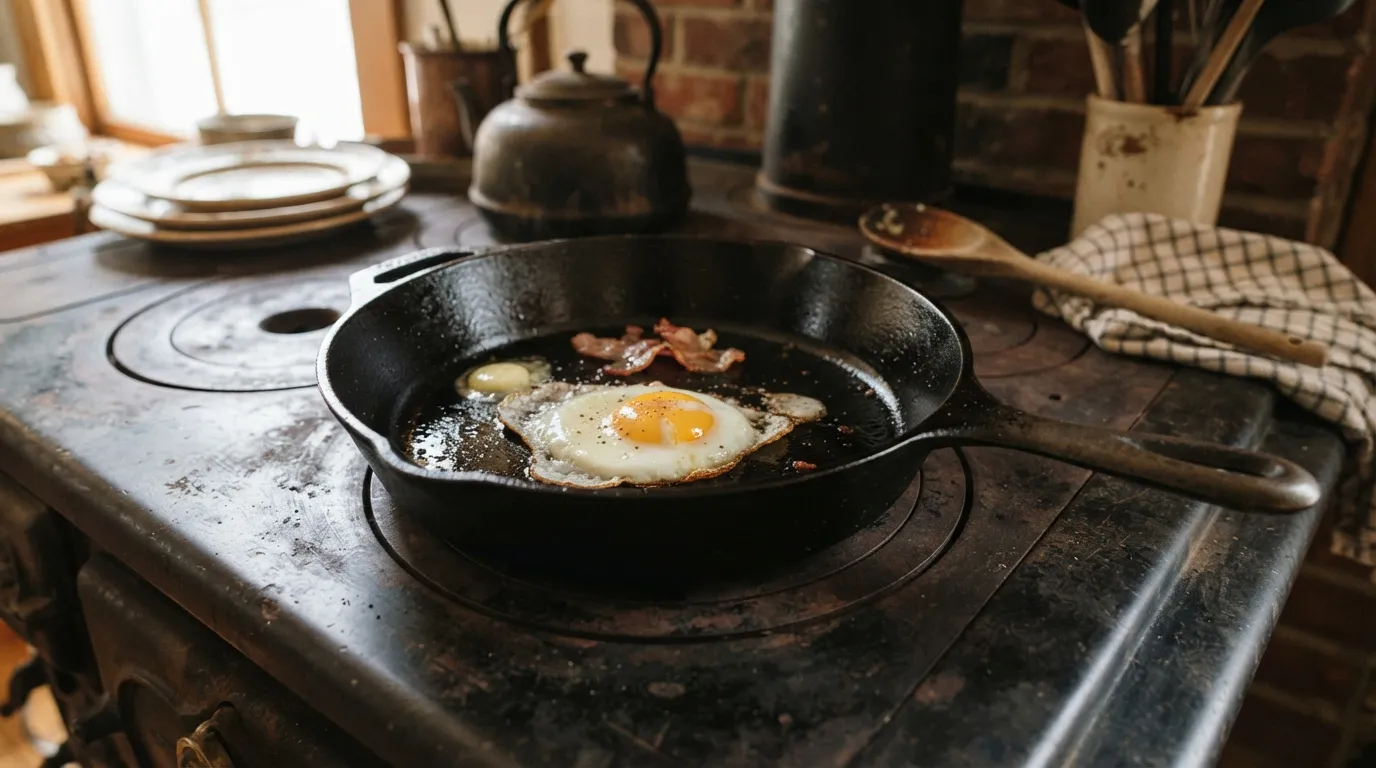
Cast iron dominated American kitchens for over a century because it matched how wood-burning stoves and hearths actually worked. It wasn’t tradition for tradition’s sake – it was the right tool for the job.
Teflon-coated cookware was aggressively marketed as modern liberation in the 1960s and 70s, and cast iron got shelved in millions of homes almost overnight. That marketing swap is one of the biggest kitchen mistakes of the 20th century.
Teflon scratches. Cast iron improves with every single use, building a natural seasoning that gets smoother over time. Grandma’s skillet was at its very best the day she passed it down.
But that’s nothing compared to what we found about #1…
#1 – The Family-Sized Dutch Oven
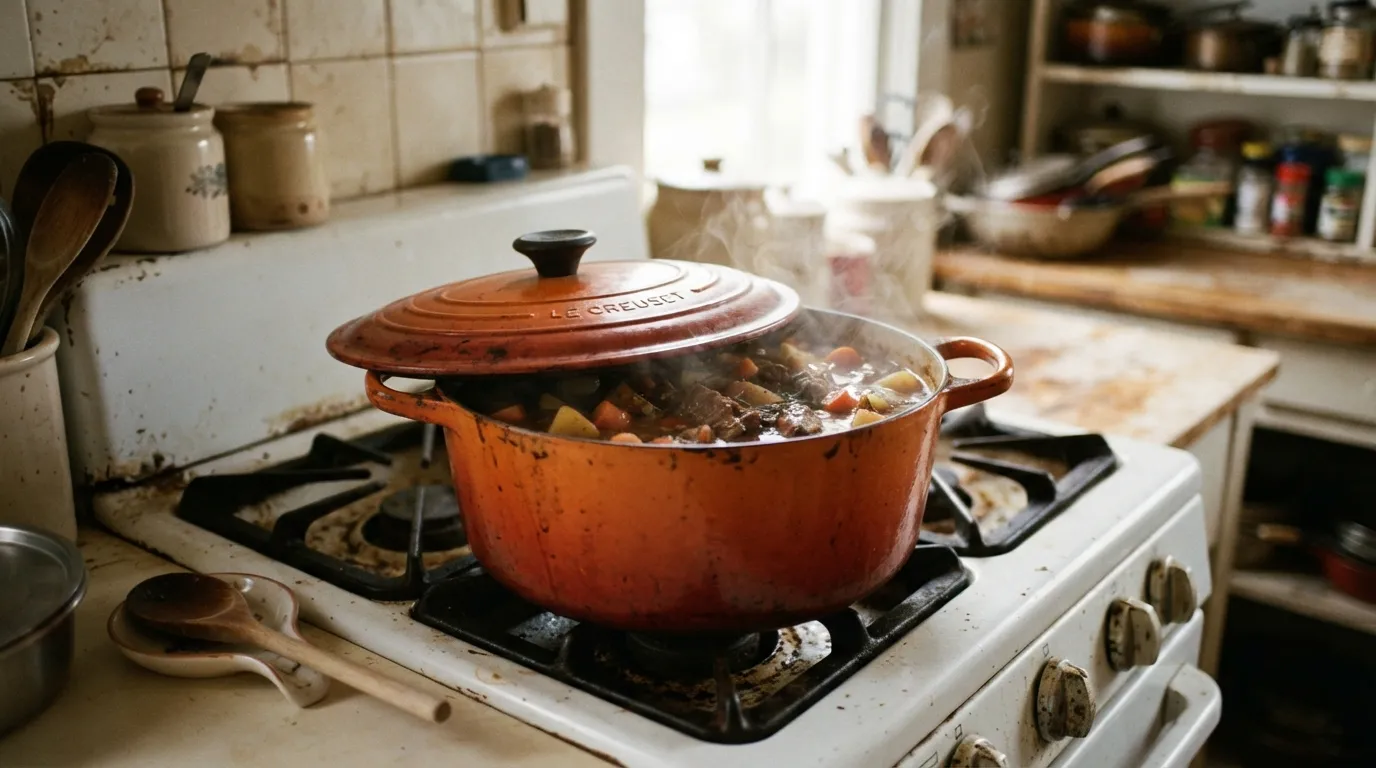
Every single item on this list points back to one thing: grandma cooked for people, not for convenience. Nothing proves that more than the Dutch oven – the heavy, lidded pot that sat on the stove for hours, producing meals that couldn’t be rushed.
A well-made vintage Dutch oven – enameled cast iron, thick walls, a lid that actually seals in steam – is a different object entirely from a modern equivalent. The walls are thicker, the heat is steadier, and the result is measurably better.
At a Glance
- Thick enameled cast iron holds and distributes heat far more evenly than lightweight modern pots.
- A tight-fitting lid traps steam, letting tough, cheap cuts turn tender over hours instead of minutes.
- Vintage Le Creuset pieces are chased by collectors just as hard as brand-new ones – sometimes harder.
Vintage Le Creuset is just as desirable as the expensive modern version. This is the one piece every serious cook secretly wishes they’d inherited – most didn’t, because nobody knew to ask.
The Bottom Line
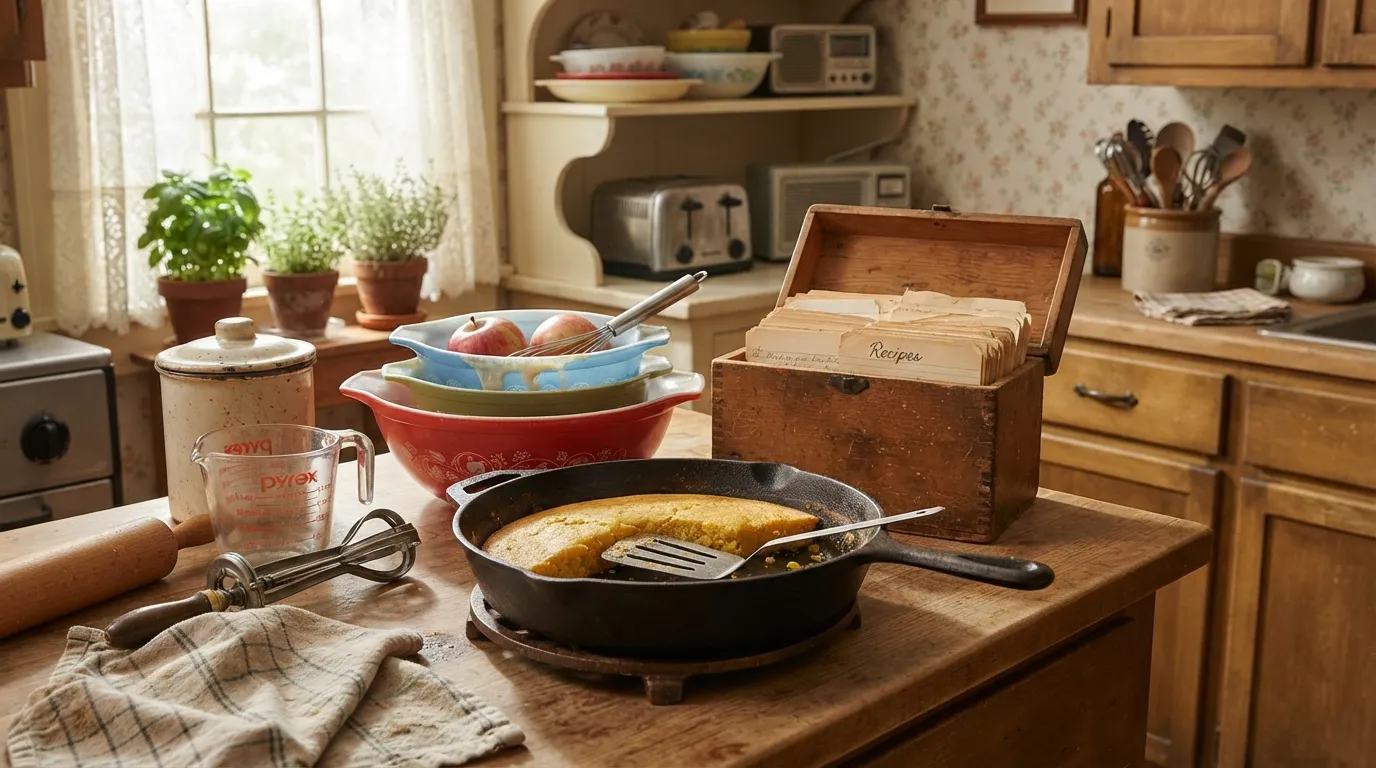
Grandma’s kitchen was never just a place to cook. It was a showroom of color, practicality, and clever tools that still hold real appeal today.
The truth is, we didn’t evolve past grandma’s kitchen – we dismantled it one Teflon pan and plastic canister at a time. The cast iron still cooks better. The Pyrex still lasts longer. The recipe box still holds more knowledge than any food app.
And the things she had that we tossed? Collectors are paying real money to get them back. Check what’s still sitting in the family cabinets before it ends up priced $2 at a garage sale.
Did we miss something from grandma’s kitchen that deserves a spot on this list? Drop it in the comments.